Services

Observe
Research, UX Investigation, Concepting. Before a project begins, a scope must be drawn. This is the cartography of exploration: nothing starts without a clear landscape. Here, patterns are named, behavior is read, context is gathered. The brief behind the brief. Effective product design and user experience begins with understanding the gap between business objectives and user behavior. My approach focuses on exploring how users navigate experiences, identifying where their expectations falter, and recognizing moments that create unnecessary friction. Through user journey mapping, heuristic analysis, competitive research, stakeholder discovery, and behavioral observation, I develop a clear understanding of the problem space before proposing solutions. The aim is to identify opportunities that enhance usability, bolster product adoption, and support business outcomes, all without relying on assumptions.

Language
Branding, Identity Systems, Art Direction. A project needs a way to speak before it has anything to say. A vocabulary is built: not a mark, but a grammar, the rules that let form, color, and tone agree with each other across time. A system is developed.
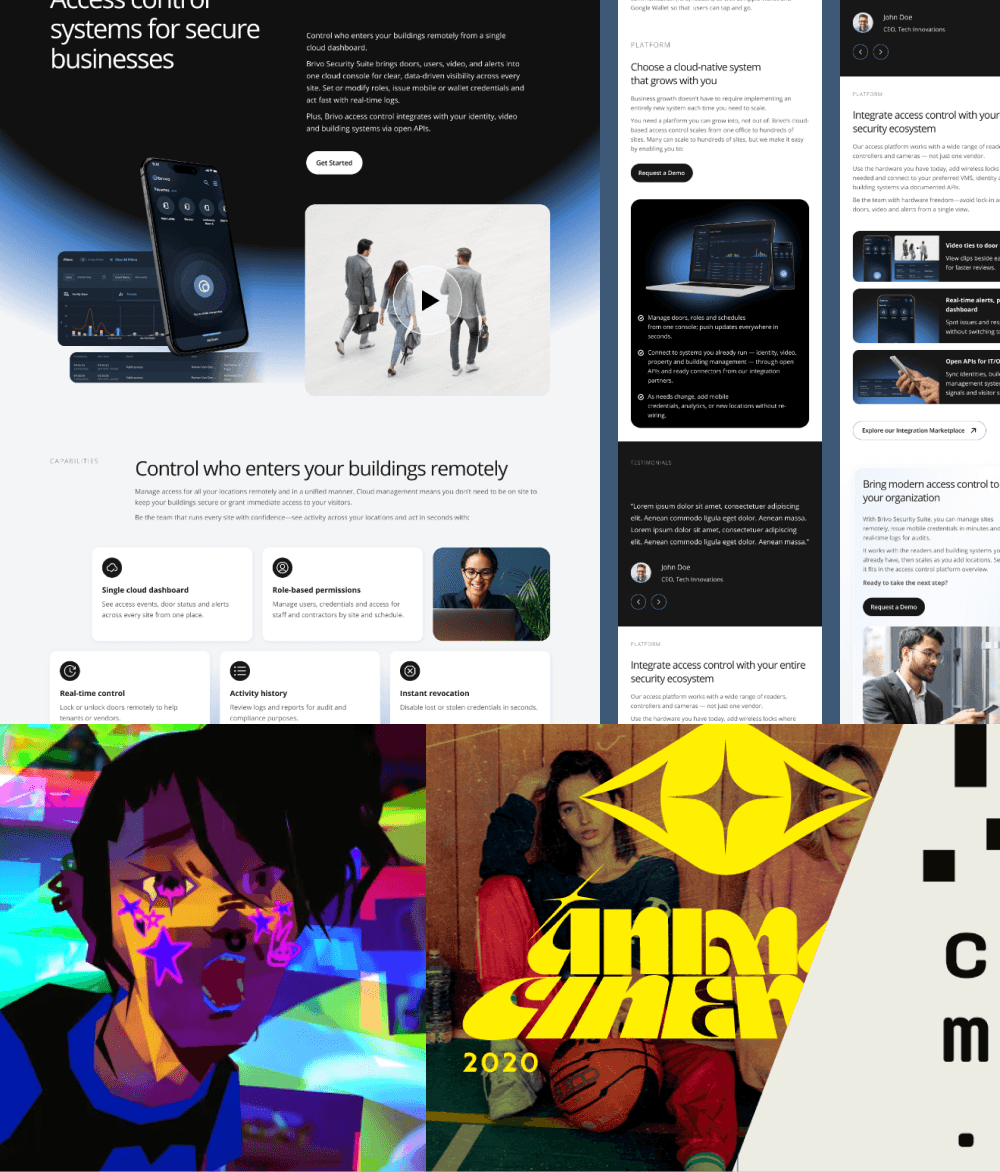
Form
UI Product, Illustration, Graphic and Editorial Design, Print Language becomes a material object. The page, the screen, the poster; whatever holds weight and can be looked at, held, or used. The abstraction stops being theoretical and starts being responsible for itself.

Motion
2D/3D Animation Form, given time. Nothing here is static by accident: every frame is a decision about rhythm, weight, and how long attention should be asked to stay. This is where stillness ends and sequence begins.

Verify
CRO, Testing, UX Optimization Intention means nothing until it is tested against behavior. The work is held accountable, not to taste, but to whether it did what it was built to do, for whoever it was built to reach. This is the discipline of turning observed behavior into measurable learning. My approach combines behavioral analysis, UX evaluation, funnel diagnostics, form analysis, and experimentation frameworks to identify where users hesitate, abandon, or fail to complete critical actions. Rather than focusing solely on conversion lifts, the objective is to understand the underlying causes behind performance gaps and prioritize opportunities based on potential impact, confidence, and implementation effort. Every recommendation is grounded in evidence gathered from analytics, session recordings, heatmaps, user feedback, and industry research. Once opportunities are identified, hypotheses are structured and validated through testing. This includes evaluating messaging hierarchy, information architecture, form experiences, trust signals, interaction patterns, and content relevance across the user journey. I pay particular attention to reducing cognitive load and unnecessary friction. The outcome is a repeatable optimization process that enables us to make informed decisions, quantify the impact of design changes, and continuously improve performance based on real user behavior.